
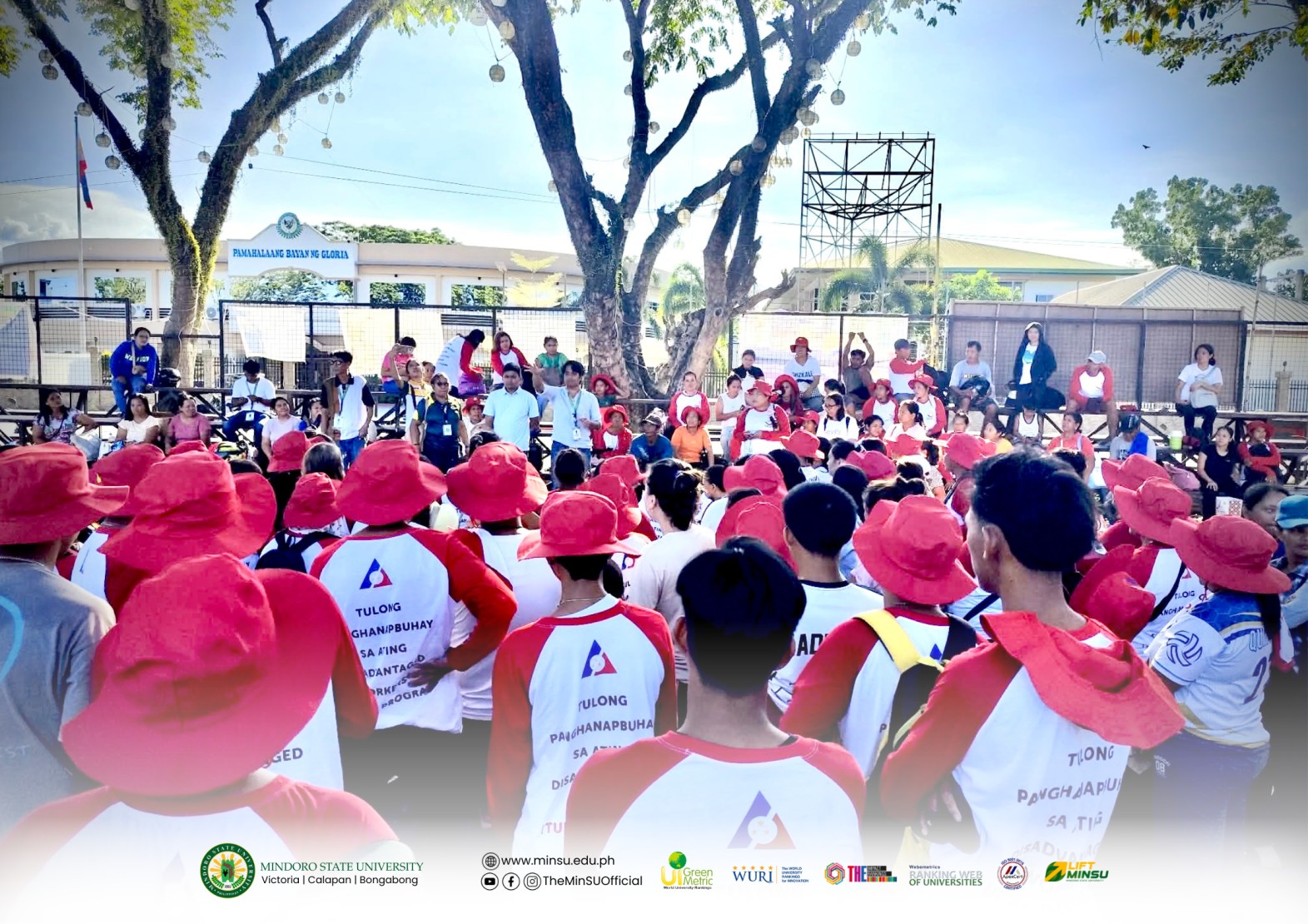
Gloria, Oriental Mindoro — Strengthening community resilience and advancing sustainable food systems, the Municipality of Gloria has officially adopted Mindoro State University’s (MinSU) flagship extension initiative, Project S.A.G.I.P. (Survival Agriculture through Green Innovative Practices), integrating it into its Masaganang Tahanan Program under the Department of Labor and Employment’s (DOLE) TUPAD initiative.
Project SAGIP was conceptualized through the visionary leadership of Dr. Enya Marie D. Apostol, University President of MinSU, in response to the growing concerns on the impact of global energy disruptions, particularly those arising from geopolitical tensions in the Middle East on food supply chains and the daily survival of Filipino families.
Recognizing the urgency of these challenges, MinSU mobilized its academic and extension expertise to develop a practical and scalable intervention.
The project is the result of a collaborative effort among key university units, including the Office of the President, Office of Research, Innovation, Technology and Extension (RITE), Office of External Linkages and International Affairs (ELIA), Office of Production and Resource Generation, and the Institute of Agricultural and Biosystems Engineering. Together, these units designed a family-scale agricultural model that is low-cost, resource-efficient, and adaptable to local community settings.
At its core, the Project SAGIP model integrates three major components: (1) structural layout and design for backyard production systems; (2) vegetable and mushroom production technologies; and (3) community training and capacity-building programs. These components are aimed at empowering households to produce their own food sustainably, even within limited spaces and resources.
To operationalize the initiative, a joint team from MinSU, in coordination with the Office of the Municipal Mayor and the Public Employment Service Office (PESO) of Gloria, conducted a series of hands-on training sessions and model installations on April 27–28, 2026, at the Municipal Gymnasium and Plaza of Gloria. The activity brought together program beneficiaries, local officials, and technical experts, fostering knowledge exchange and practical learning.
The integration of Project SAGIP into the Masaganang Tahanan Program underscores the strong partnership between MinSU and the local government of Gloria in promoting inclusive development, sustainable agriculture, and community empowerment. It further demonstrates how academic institutions can translate innovation into meaningful, on-the-ground solutions that directly benefit communities.
via | Engr. Jerrel S. Reyes
#SDG1 #SDG2 #SDG9 #SDG12 #SDG17
(kpic)

302 Staff

10531 Students

9 Colleges

3 Years