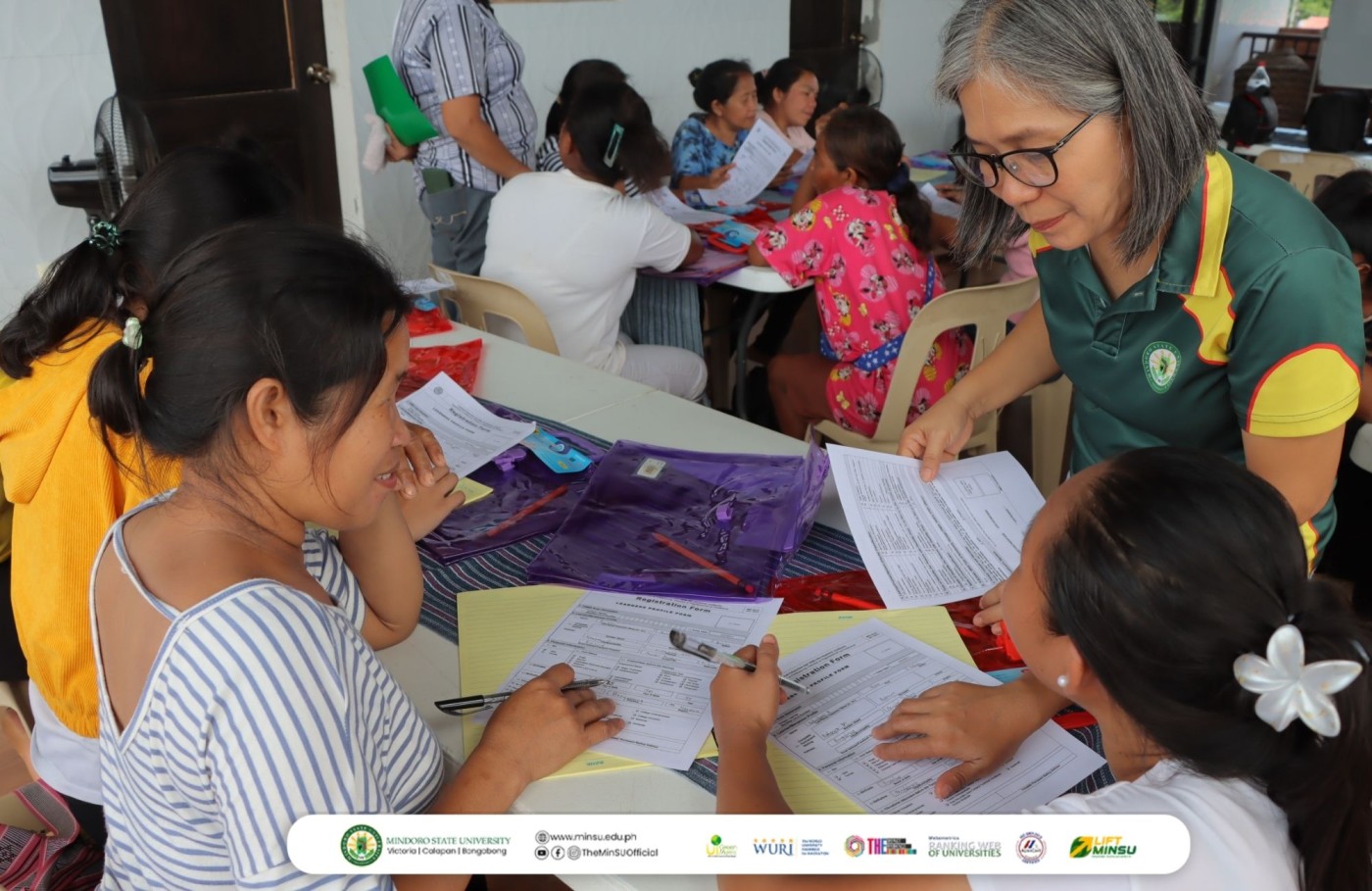
Fifty members (50) of Mangyan communities in Oriental Mindoro completed a six-day entrepreneurship certificate training organized by Mindoro State University (MinSU) under its DOST-PCAARRD-funded S&T Community-Based for Inclusive Development (STC4iD) Program.
The training, titled Enhancing Livelihood Opportunities of Mangyan Communities through S&T-driven Entrepreneurship Certificate Training, was conducted in two batches of three days each from June 29 to July 4, 2026, at the PMUI Training Center in Victoria, Oriental Mindoro. The program was implemented in partnership with the Technical Education and Skills Development Authority (TESDA)-MIMAROPA and Pampamayanang Mangyan Ugnayan, Inc. (PMUI).
The program aimed to strengthen the entrepreneurial capacity of Mangyan beneficiaries by equipping them with practical business knowledge and skills that can help transform agricultural gains into sustainable livelihood enterprises.
According to Dr. Pinky B. Carig, Project Leader of the STC4iD Program, the Mangyan communities have already benefited from science and technology interventions that improved their agricultural production and introduced more efficient and sustainable farming practices.
“The communities have already been equipped with improved agricultural practices and livelihood skills through science and technology interventions. However, a critical gap remains in transforming these gains into sustainable and income-generating enterprises,” Dr. Carig said.
She noted that many beneficiaries continue to face challenges in market access, financial management, product development, and enterprise planning, limiting the full potential of the earlier S&T interventions.
To address these challenges, the training focused on science and technology-based entrepreneurship education through practical and community-centered learning.
The sessions were facilitated by Ms. Ma. Lourdes V. Del Mundo, Senior TESD Specialist of TESDA, and covered seven comprehensive modules, including identifying business opportunities, preparing simple business plans, computing costs and income, financial management, marketing strategies, and workplace safety.
Dr. Carig further said the partnership with TESDA was intended to provide structured entrepreneurship training that would enable participants to convert agricultural knowledge into viable livelihood enterprises.
As the training concluded, the initiative is expected to help Mangyan communities turn improved agricultural production into sustainable enterprises, strengthening livelihoods and creating greater economic opportunities. (jdtdc)
#SDG1 #SDG8 #SDG10 #SDG17

302 Staff

10531 Students

9 Colleges

3 Years